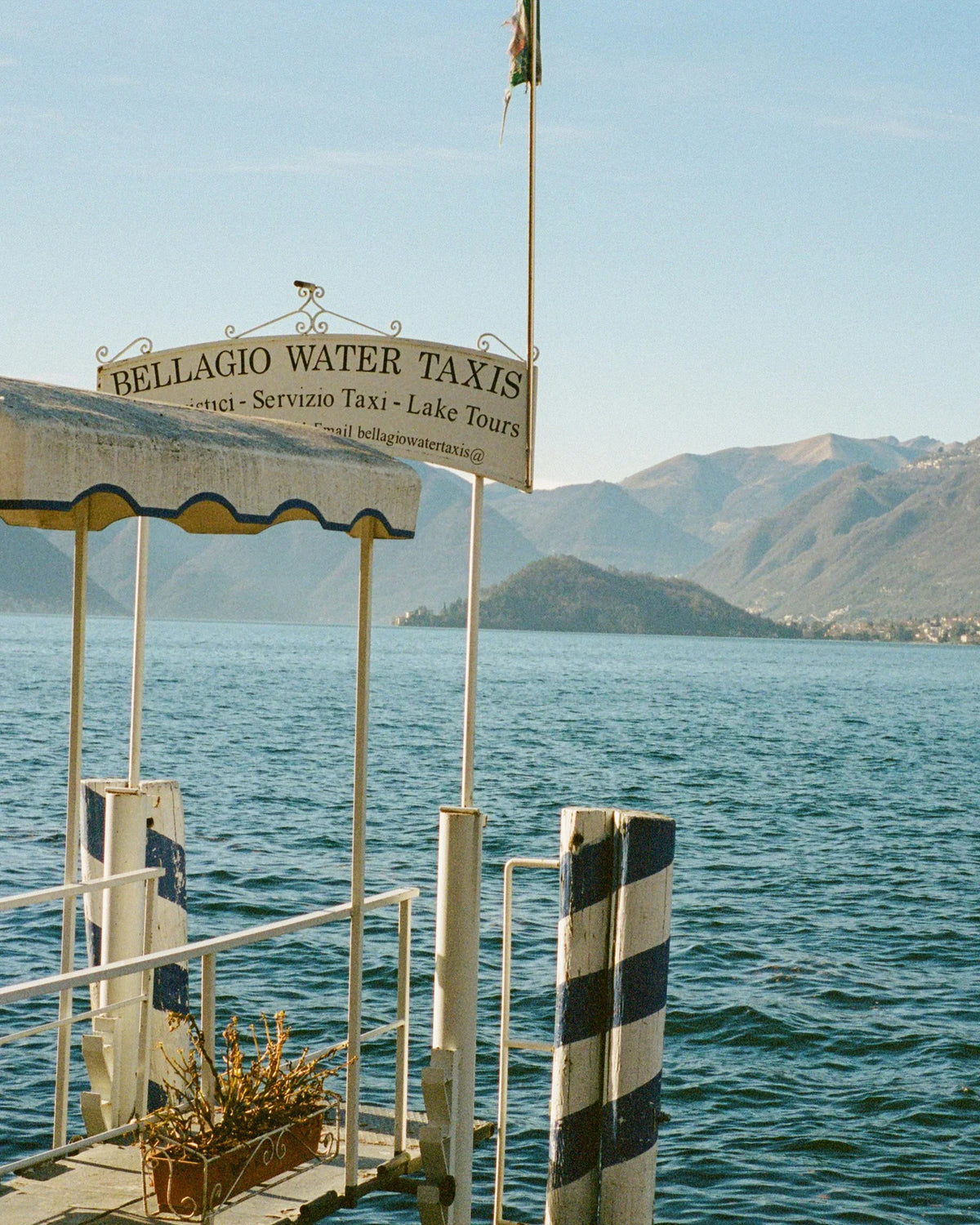

Italy’s most famous opening line was written about this exact stretch of water. “Quel ramo del lago di Como, che volge a mezzogiorno”: that branch of the lake of Como, which turns towards the south. Generations of Italian schoolchildren can recite what follows, whether they want to or not, because the novel it opens is the one nearly every Italian studies at school, usually twice.

Have You Been Told About Lake Como?
That branch of the lake

The novel is I promessi sposi, The Betrothed, and its opening pages barely mention a person at all. Alessandro Manzoni spends the first several pages simply describing the lake itself: the mountains that pen it in, the branch that bends towards Lecco, the villages strung along the shore. Only once the geography is settled does he introduce Don Abbondio, a timid village priest walking home at dusk, and the two armed men waiting for him on the road. They belong to Don Rodrigo, the local lord, and their message is short: he is not to marry the young couple he has promised to marry, Renzo and Lucia, or he will regret it. A love story, in other words, that begins as a story about who is allowed to say no to power, and who isn’t.
That question runs under the whole book. Renzo and Lucia are peasants, silk workers with almost no standing of their own, up against a nobleman who can bend a priest with a threat and a magistrate with a bribe. What follows is flight, imprisonment, riot in the streets of Milan and, worst of all, the plague that swept the city in 1630, described in enough close, physical detail that it still unsettles readers two centuries on. Faith carries the couple through more of it than courage does. When Manzoni was writing, Lombardy itself lay under foreign rule, first Spanish, by his own day Austrian, and readers in 1827 had no trouble reading a seventeenth century nobleman’s abuse of two powerless villagers as a story about their own century too.

Manzoni did something stranger than write a beloved novel, besides. Italy did not yet exist as a country when he began it: the peninsula was a patchwork of kingdoms and small states whose dialects could barely understand one another. He chose the Florentine of Tuscany as his model and, unsatisfied with his first attempt, spent years rewriting the entire novel into it, a labour he once described as rinsing his linen in the river Arno. The rewritten book taught Italians, in effect, what their own written language should sound like.
Giuseppe Verdi, who revered him, wrote his Requiem for the first anniversary of Manzoni’s death in 1873.
The lake itself settles any argument about ownership better than local pride ever could. Shaped like an upturned Y, the lake runs south as one long body of water to Bellagio, where it divides into two arms, one ending at Como, the other at Lecco. Manzoni’s opening line describes the Lecco arm, yet even he called it “quel ramo del lago di Como”. The lake he was really writing about is the whole stretch: the mountains that hold it in on every side, and the light across the water that has been drawing people to its edge for centuries.
Two centuries on, anyone who has stood at that water’s edge at the right hour understands exactly why he started there.